
Advanced SEO strategies help buisinesses attract visitors who are genuinely intrested in their products or services.Most businesses do not have a problem with traffic. They have a problem with relevance. They rank for keywords that bring in visitors who are not interested, and then wonder why those visitors do not become leads. In this guide, I will share the SEO strategies I use with clients in different industries. These strategies help turn search visibility into business results.
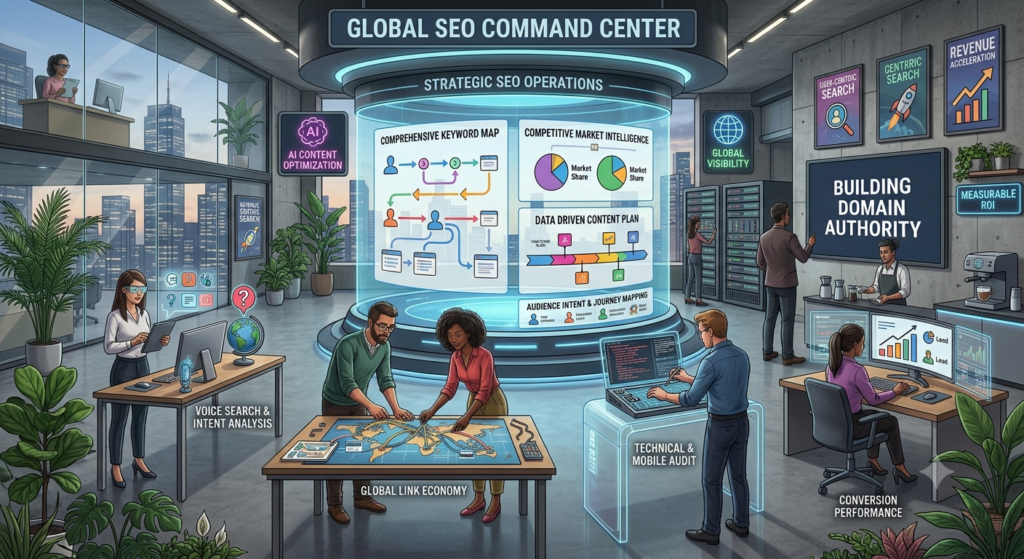
I focus on helping businesses grow their presence. My goal is to attract the audience and generate more qualified leads. I combine keyword research, on-page SEO, technical improvements, content planning, and performance tracking. Every strategy is made to fit the business’s goals, its audience, and the competition it faces.
Advanced SEO Strategies : Start with Search Intent
The biggest mistake I see is simple. Businesses go after keywords without thinking about intent.
They target highly competitive terms. They don’t ask what their customers are really searching for. A keyword is a word or phrase. Search intent is the reason behind the search. Someone looking up “what is technical SEO” wants to learn. Someone searching for “SEO services for business” is ready to talk.
Google says the thing. Create content that meets the needs of the person searching. See Google’s guidance on content.
Before you make any changes, sort your keywords into three groups:
– Informational: The searcher wants answers (guides, how-tos).
– Navigational: The searcher wants a brand or page.
– Transactional: The searcher is ready to buy or inquire.
Then match each page to one type of intent and one clear call to action. A blog post that tries to teach and sell at the same time usually fails at both.
My Advanced SEO strategies for a New Website
When I begin with a website, I follow three steps. They are not flashy. They keep the work focused and effective.
1. Run an SEO audit. I check for issues, missing content, and opportunities that were missed. This tells me what is holding the site back before I create content.
2. Research keywords, intent, and competitors. I look at how people search, who ranks for topics, and who the target audience really is. This is where the intent work happens.
3. Optimize pages and set up tracking. I improve titles, headings, content, internal links, and technical elements on the important pages. Then I build a plan for growth and monitor performance over time.
Advanced SEO Strategies Beyond the Basics
Once the foundation is strong, two tactics make the difference in my experience.
Using Advanced SEO Strategies to Study Top-Ranking pages
Open the results for your target keyword. Look at what searchers get. What questions do the pages answer? What format do they use? What’s missing? Then build something more complete, more useful. The goal is not to copy the leaders. It’s to cover the topic with your own expertise and examples.
Advanced SEO Strategies for Planning your Internal Links
Internal linking is often overlooked. A smart link structure helps search engines understand how your pages connect. It also guides visitors to the helpful page, which supports both rankings and conversions.
A simple approach:
– Link from guides to specific service or product pages.
– Use descriptive anchor text. Avoid phrases like “click “
– Link new posts to older related ones. Update posts to link back to newer ones.
Google’s SEO Starter Guide explains how links and a clear site structure help search engines find and understand your content.
A Real-World Example of Advanced SEO Strategies for a Local Business
One project I worked on was a business website. The client wanted to appear higher on Google and bring in potential customers. I focused on keyword research, optimizing pages, improving on-page SEO, and creating content around relevant search terms.
Over time, the site began ranking for relevant keywords. Organic traffic grew. That gave the business an online presence and more chances to get leads.
To be honest, results like these depend on competition, budget, and how much time you allow. SEO takes time. No one can promise a ranking or timeline.
If You Can Only Use Advanced SEO Strategies This Month
Pick a high-intent keyword that matches something you sell. Then. Improve one dedicated page around it. Make sure the page clearly answers what a potential customer is looking for: what you offer, who it’s for, what it costs or how pricing works, and what to do next.
This works because it connects SEO directly to a business goal. You are not chasing traffic numbers. You are attracting visitors who’re closer to buying.
Track What Matters with Advanced SEO Strategies
Advanced SEO strategies only work if you measure them. Use Google Search Console to see which queries bring impressions and clicks. See which pages need improvement. Then connect that data to business results like inquiries and sales—not rankings.
Update your performing posts every quarter. Fix facts, add new internal links, and check that your structured data still works. Also keep a tracker so two pages on your site don’t compete for the same keyword.
Frequently Asked Questions About Advanced SEO Strategies
What are Advanced SEO strategies?
They go beyond keyword placement. They include matching search intent, building an internal link structure, improving technical health, and connecting SEO efforts to business outcomes.
How long do advanced SEO strategies take to work?
It varies. Most sites need months to see meaningful progress. Competitive markets may take longer.
Should I target volume or high-intent keywords?
Start with high-intent keywords. They bring visitors, but those visitors are more likely to become leads.
How often should I update content?
A quarterly review of your pages is a good habit.
Conclusion
The best advanced SEO strategies are not tricks. They come down to understanding what your customers are searching for. Build pages that answer those searches well. Connect those pages with SEO services. Measure what happens.
Start with one high-intent page this month. Build from there.